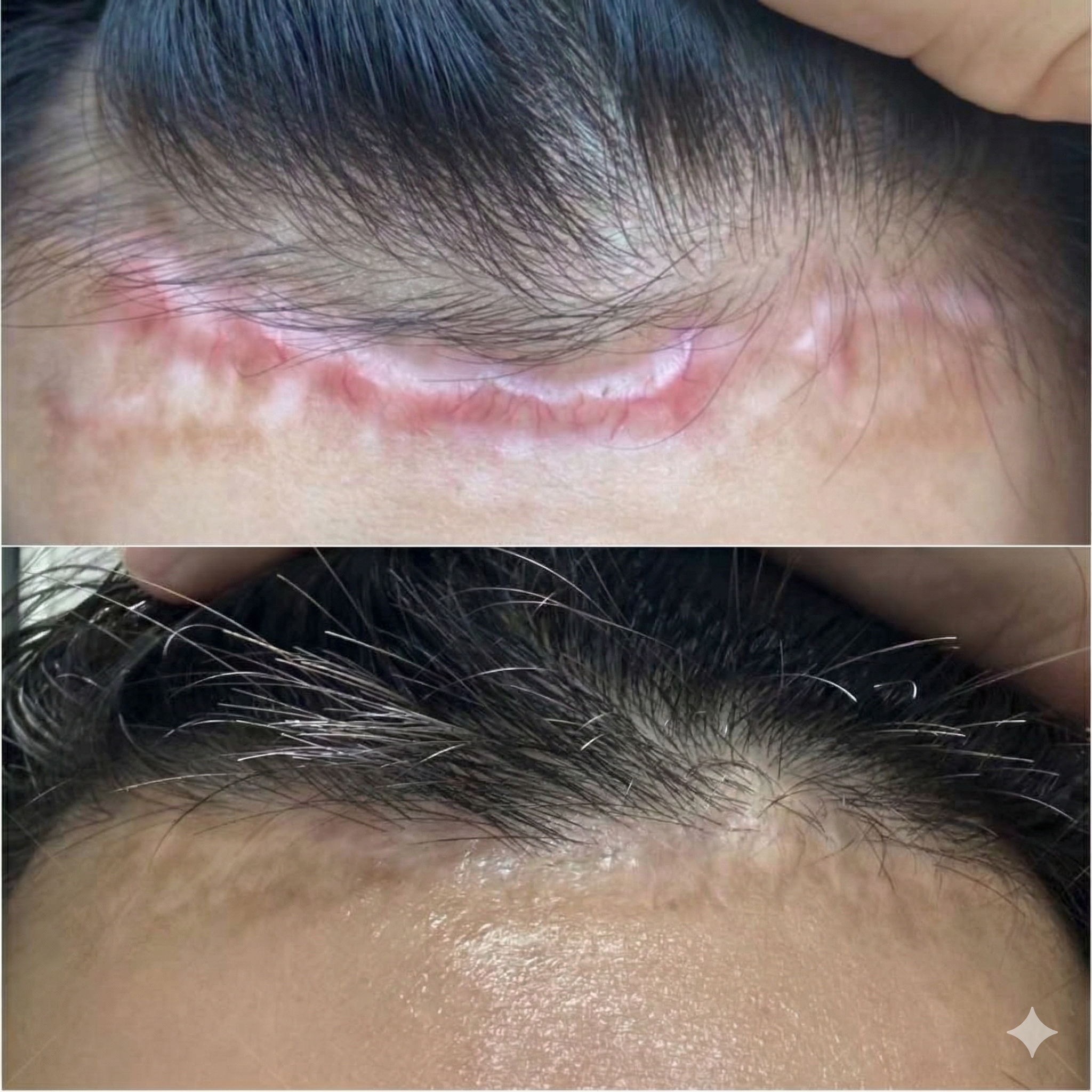
The Background: Unexpected Scarring After Hairline Surgery
A 29-year-old junior colleague at a traditional Chinese medicine hospital decided to undergo hairline-lowering surgery, expecting a simple and straightforward procedure. Initially, everything seemed routine, but after the incision healed, she was shocked to find a raised, noticeable scar. Hoping to improve the appearance, she even underwent a second surgery, but instead of flattening, the scar became thicker, more prominent, and discolored, drawing concern even from her coworkers.
This left her anxious and frustrated. She understood that conventional interventions, like surgical revision or injections, carry unpredictable outcomes and potential complications, particularly in sensitive areas like the hairline. She wanted a safe, effective, and convenient solution that could fit into her busy hospital schedule.
The Treatment Journey: Early Improvements with Herbal Care
Following a friend’s recommendation, she began using a herbal scar removal solution. Despite her demanding schedule, she completed only two to three treatments. In less than two months, the scar softened noticeably, the hypertrophic tissue reduced, and discoloration began to fade—far beyond her initial expectations.
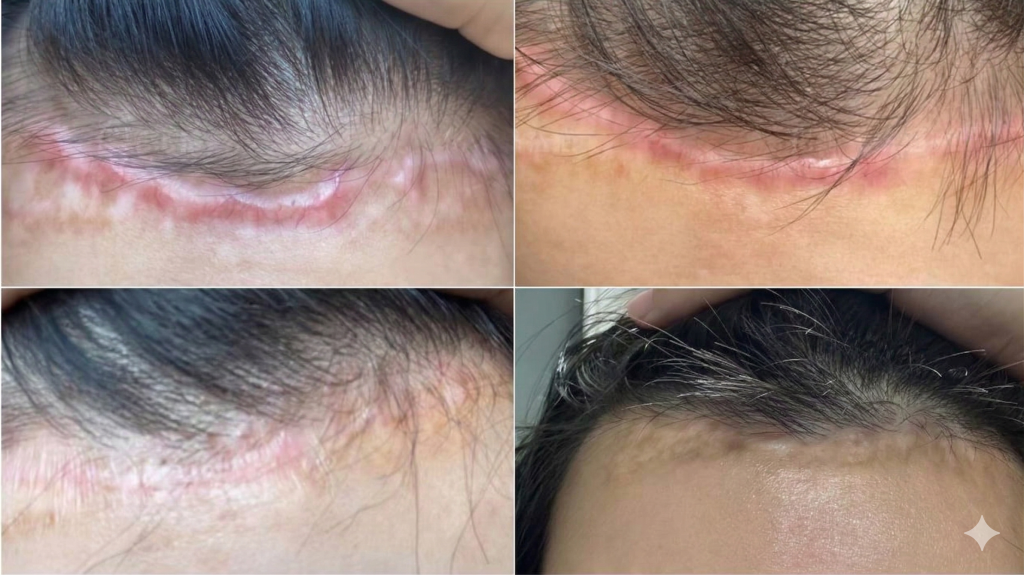
Although the improvement was significant, the scar has not yet completely disappeared. Medical guidance suggests that continuing the treatment for another month would help achieve further flattening and normalization of the skin. This next step has not yet been undertaken, but the patient is confident and motivated to continue the regimen.
This case illustrates how gentle, consistent, non-invasive care can initiate visible scar improvement even within a relatively short period.
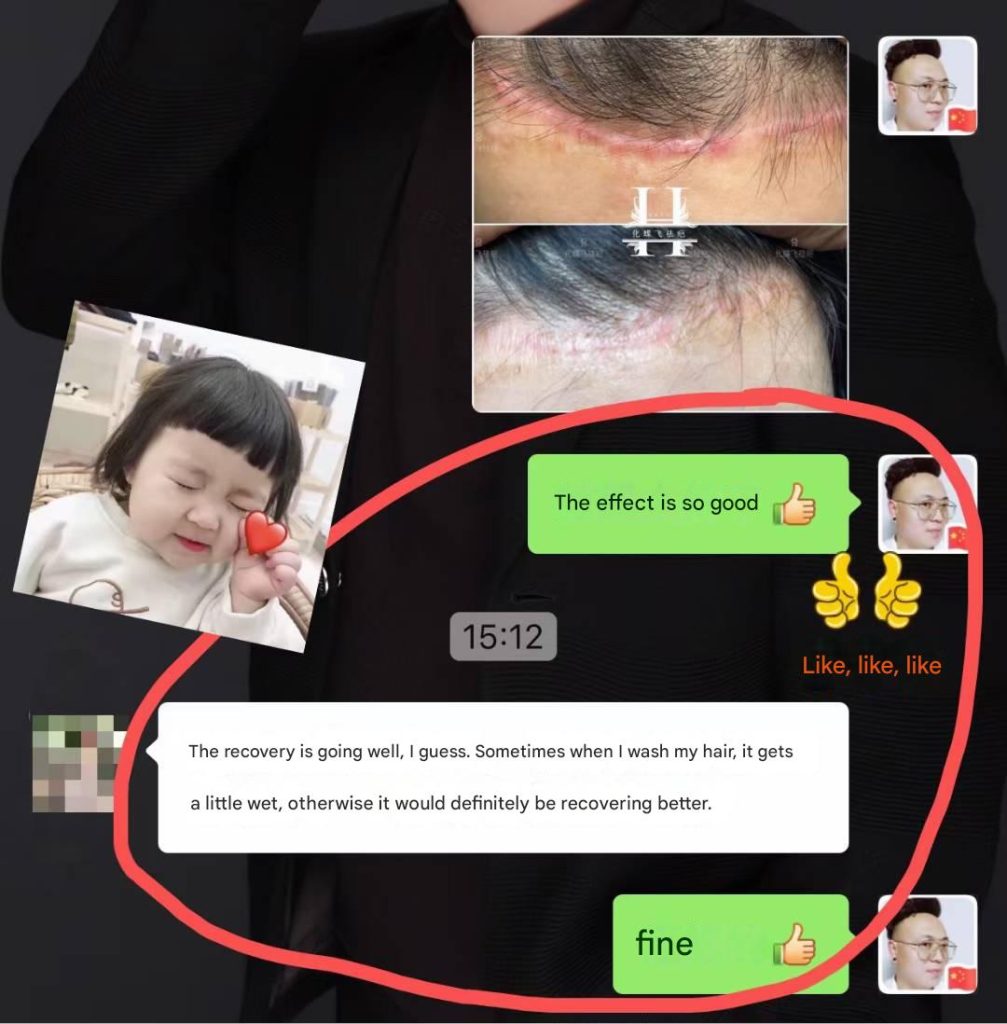
Doctor’s Analysis: Why Herbal Scar Treatment Works and Considerations After Hairline Surgery
Hypertrophic scars occur due to excessive collagen deposition following surgical trauma. Areas like the hairline are especially prone to scarring because of skin tension, frequent movement, and underlying hair follicles. In the context of hairline-lowering surgery—or after hair transplant procedures—the skin and scalp are delicate, and improper healing can easily lead to raised or thickened scars.
The herbal scar solution works on several levels: it enhances microcirculation in scar tissue, softens fibrotic tissue, and helps regulate collagen metabolism, promoting gradual remodeling of the scar without introducing trauma. Unlike invasive procedures or steroid injections, which carry risks of infection, nerve damage, or triggering further scarring, this approach is non-hormonal, non-invasive, and safe for home use.
For patients who have undergone hairline surgery or hair transplantation, there are additional considerations:
- Minimizing tension and irritation in the healing scalp is crucial, as excessive pulling or scratching can worsen scar formation.
- Timing of interventions matters: surgical revision of a scar too soon after hairline surgery or hair transplant may risk damaging hair follicles, slowing healing, or causing new scar tissue to form.
- Non-invasive treatments like herbal solutions are often recommended as first-line management before considering secondary procedures, providing a safe period for the skin to remodel.
- Long-term follow-up and patient adherence are essential; even after visible improvement, continuing gentle care supports lasting results and reduces recurrence risk.
From a traditional Chinese medicine perspective, the formula used in this solution helps promote microcirculation, soften scar tissue, and inhibit hypertrophic growth, supporting the skin’s natural repair mechanisms. Scientifically, maintaining balanced collagen metabolism and supporting the microenvironment of the scar ensures that the tissue gradually returns to a more normal state.
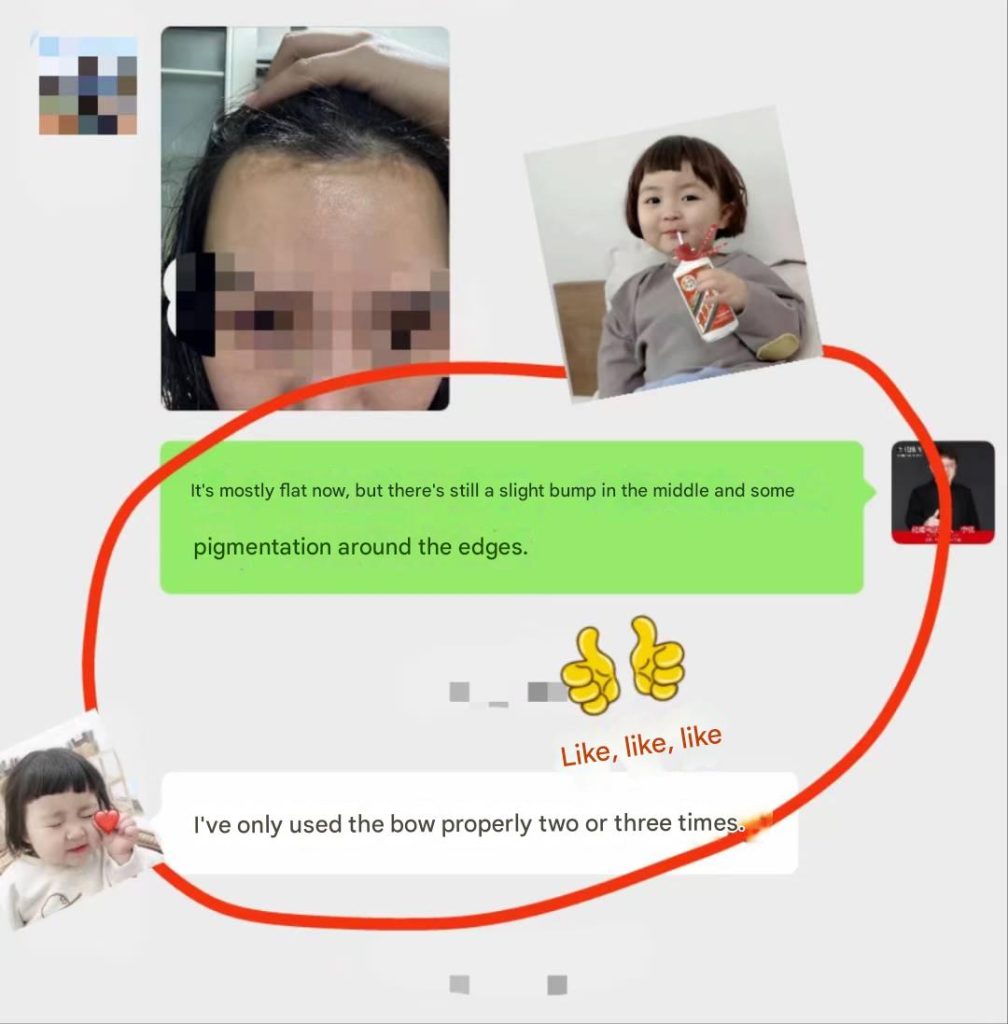
This case emphasizes that scar management after hairline surgery or hair transplantation requires patience, careful observation, and a method that respects the sensitivity of the scalp. By combining gentle, consistent treatment with proper post-operative care, patients can achieve meaningful improvement while protecting hair follicles and overall skin health.
Leave a Reply