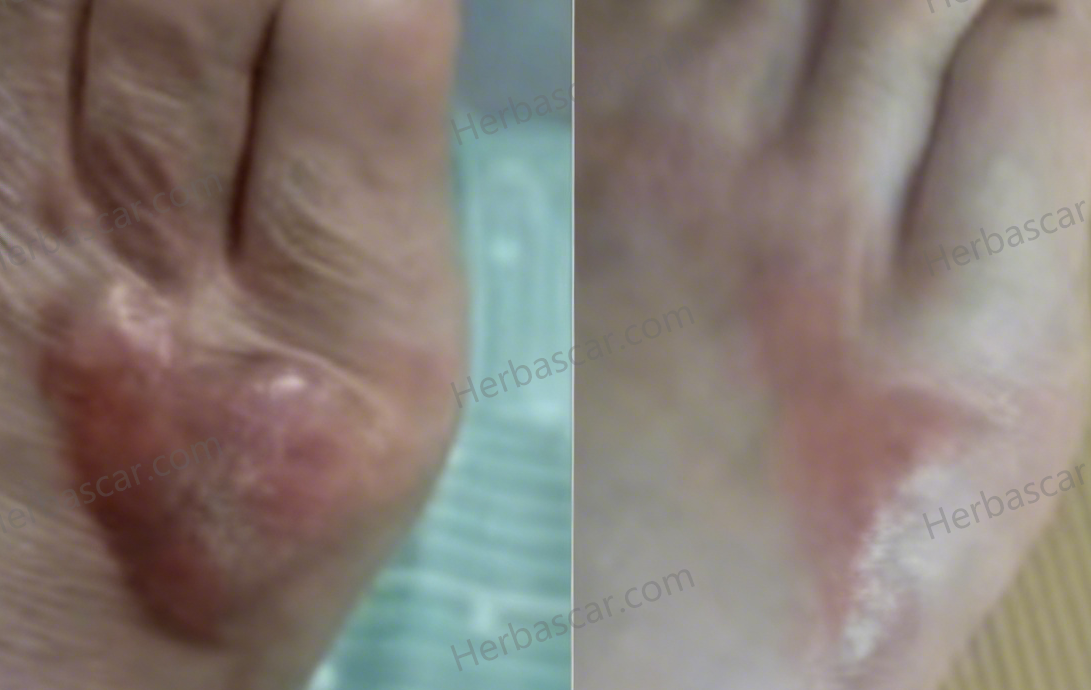
Summer is meant for sandals, sunshine, and carefree steps. But for one young woman, it became a season of worry. A small injury near her little toe developed into a hypertrophic scar—thick, itchy, and gradually growing larger. What should have been a minor inconvenience turned into a source of stress, affecting her mobility, confidence, and even her ability to enjoy summer footwear. Her journey to restoring healthy, smooth skin is not just about scar treatment—it is a story of patience, consistent care, and reclaiming self-assurance.
The Background: From Foot Injury to Anxiety Over Open Shoes
A young woman in her twenties experienced a minor injury near her little toe. Initially, she assumed it would heal on its own. However, after the wound closed, abnormal scar tissue started forming. Over time, the scar became firm, raised, and itchy. Its location made conventional interventions such as laser therapy, steroid injections, or surgery problematic, as these treatments could risk further damage or recurrence in such a delicate area. The thought of wearing open shoes became a source of anxiety, and everyday walking was uncomfortable due to pain and tension.
The Treatment Journey: Patience and Gradual Transformation
Faced with limited options, she opted for a traditional herbal scar-removal solution recommended by her doctor. Applying it was initially challenging because walking in shoes daily limited absorption and slowed metabolism, but she remained consistent.
Within a few days, the scar started to soften, and tension eased. Over several weeks, the thick, raised tissue gradually became thinner and smaller. It lost its rigidity, itching diminished, and the overall texture improved. After just over a month, the transformation was remarkable: the scar was visibly reduced, and she regained confidence to wear sandals comfortably.
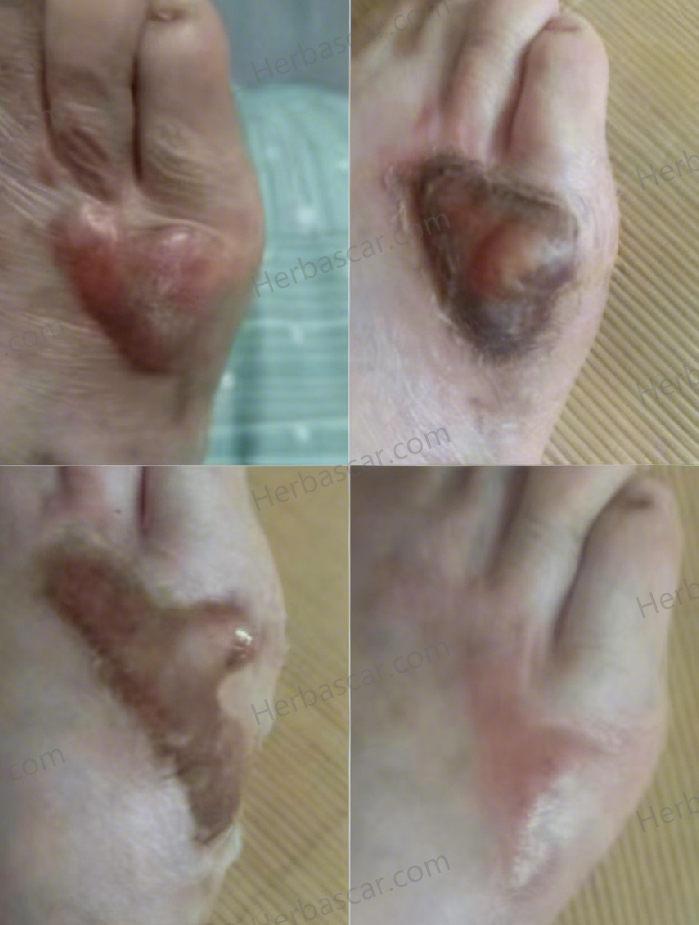
Her experience demonstrates that scar management is often less about rapid change and more about steady, consistent care over time, especially in sensitive areas.
Doctor’s Analysis: Why This Approach Worked
The topical herbal solution used in this case is formulated according to a centuries-old traditional Chinese medicine recipe. Its mechanism focuses on improving microcirculation, softening fibrotic tissue, regulating collagen deposition, and gradually restoring the scar closer to normal skin texture. It contains no harmful ingredients and can be safely applied at home, making it ideal for delicate areas where invasive treatments may carry higher risks.
From a broader scientific perspective, hypertrophic scars form when fibroblasts become overactive, producing excessive collagen during the wound-healing process. This leads to dense, raised, and often itchy tissue that can extend beyond the original injury. Such scars are particularly prone to occur in areas exposed to friction, tension, or repeated minor trauma, like toes, fingers, or underarms.
Scar tissue differs from normal skin in several ways: it has abnormal vascularization, resulting in redness and itchiness, and the collagen fibers are densely packed and disorganized, which contributes to rigidity. Without proper management, hypertrophic scars can persist for months or even years, sometimes worsening if the area is irritated or repeatedly traumatized.
Non-invasive care works by supporting natural tissue remodeling. Gentle, consistent application helps gradually realign collagen fibers, improve local blood circulation, and promote balanced tissue metabolism. This reduces thickness, softens the scar, and prevents excessive proliferation without introducing secondary trauma.
Understanding these mechanisms highlights why patience, daily care, and avoiding repeated irritation are essential in scar management. Aggressive interventions may appear faster but carry risks such as infection, pigment changes, nerve injury, or recurrence, especially in delicate or high-movement areas.
Final Takeaway
Even minor injuries can leave hypertrophic scars that affect not only comfort and mobility but also self-confidence. In delicate areas where invasive treatments carry higher risks, gentle, consistent, non-invasive herbal therapy offers a safe and effective path for improvement. Beyond visibly reducing thickness, softness, and itchiness, this approach works with the skin’s natural healing processes, gradually restoring normal tissue structure.
For patients, this means more than just improved appearance—it means reclaiming confidence, comfort, and freedom in daily life. A small, persistent scar no longer has to dictate your choices or limit your activities; with the right approach, it can gradually become a manageable part of your skin’s healing journey.
Leave a Reply