Liposuction is widely regarded as a relatively safe and mature cosmetic procedure. However, once complications occur—especially when combined with thermal injury—the resulting scars are often far more complex than ordinary surgical scars.
They are not just a cosmetic issue, but a combination of burn damage, fibrosis, and abnormal healing, making treatment significantly more challenging. Many patients are eventually advised to undergo reconstructive surgery. But is surgery always the only solution?
The Background: From Aesthetic Pursuit to Severe Post-Surgical Scarring
Customer Profile:
A professional model with high aesthetic demands and long-term exposure to camera work.
History:
In pursuit of more sculpted and defined thighs, she underwent liposuction. During the procedure, complications occurred, leading to intraoperative thermal injury—a known but uncommon risk in liposuction, especially when energy-based devices or improper technique are involved.
Instead of achieving the desired contour, the surgery resulted in extensive tissue damage.
Symptoms:
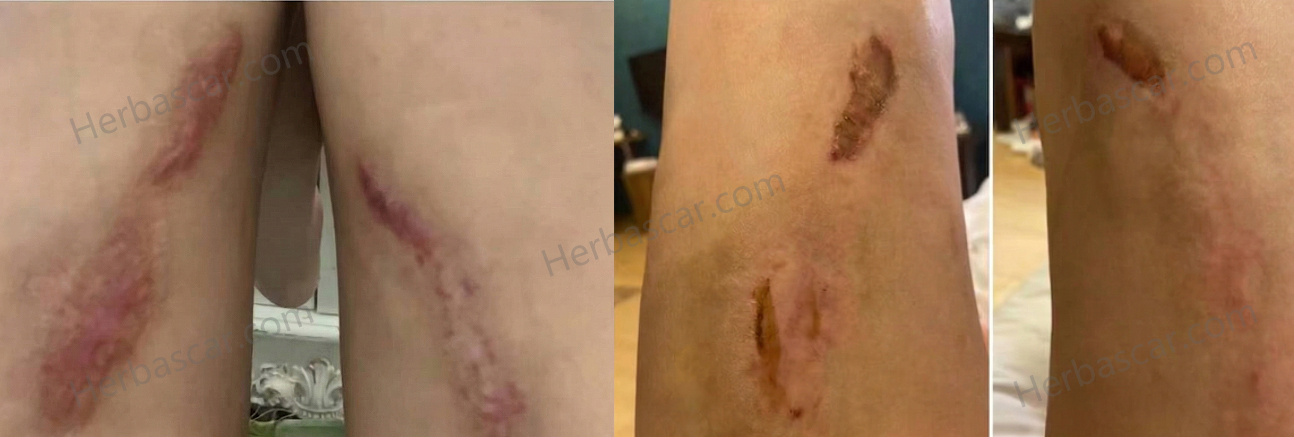
During the healing phase, the injured areas developed severe post-liposuction burn scars, characterized by:
- Diffuse hyperpigmentation across the thighs
- Thickened, hardened scar plaques
- Uneven, distorted skin surface
- Reduced elasticity due to underlying fibrosis
- Features consistent with hypertrophic scarring and partial burn sequelae
Unlike simple surgical scars, these lesions involved deeper dermal damage and disorganized collagen deposition, making them more resistant to conventional treatments.
Functionally, the skin lost flexibility. Aesthetically, the damage was significant enough to impact her professional life. She gradually withdrew from modeling work and avoided clothing that exposed her legs.
After consulting multiple institutions, including a top-tier hospital in Shanghai, she was advised to consider tissue expansion combined with skin grafting. This approach aims to replace damaged skin but involves multiple stages, high surgical burden, and prolonged recovery—factors that made her reluctant to proceed.
The Treatment Journey: A Non-Invasive Approach Under Continuous Observation
With limited options and strong hesitation toward further surgery, she turned to a topical herbal scar management approach.
At the outset, her expectations were conservative. Given the severity and duration of the scars, rapid improvement was unlikely. More importantly, the goal was not immediate removal, but gradual modulation of the scar tissue.
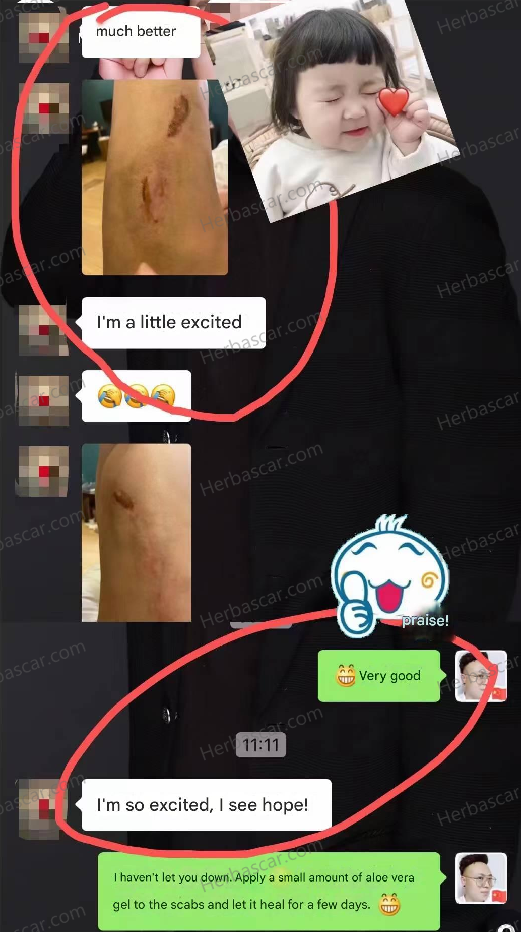
During the initial phase of application, the skin showed mild reactions such as dryness and transient redness. From a clinical perspective, this can be associated with changes in local microcirculation and epidermal turnover, rather than true deterioration.
She continued the application while closely monitoring skin response.
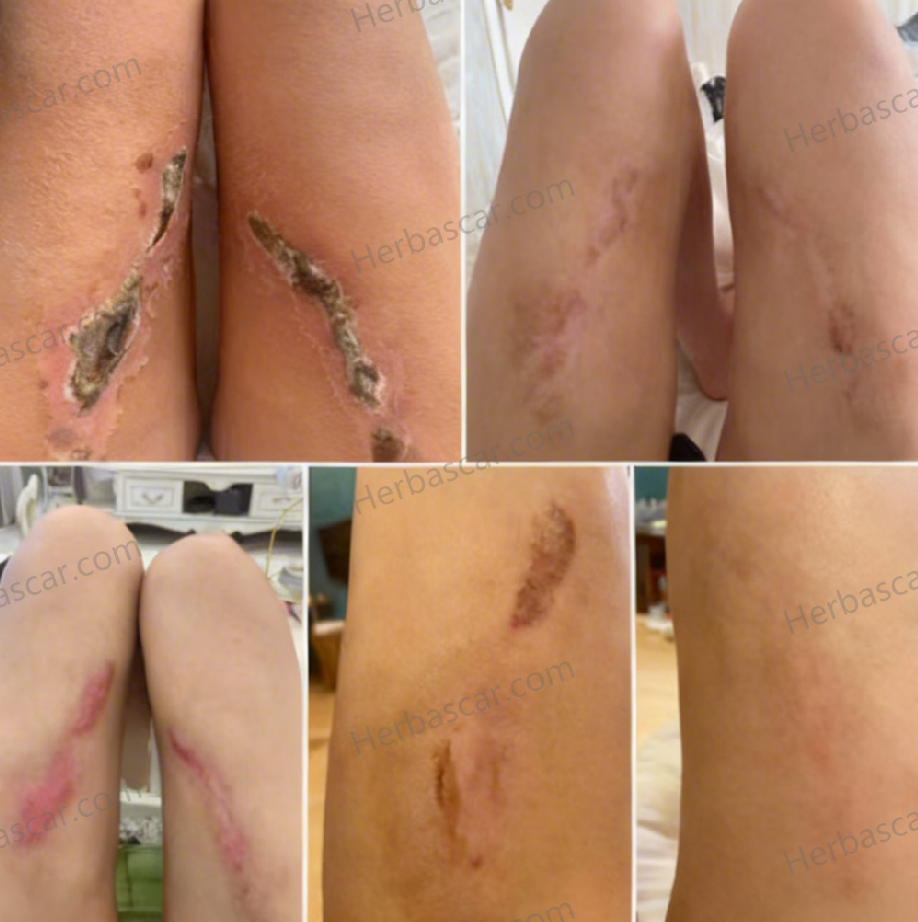
After approximately two metabolic cycles, structural changes in the scar became more apparent. The previously rigid and elevated scar tissue began to soften, indicating a reduction in fibrotic density. The height of the lesions decreased gradually, suggesting ongoing remodeling within the dermal layer.
At the same time, pigmentation started to lighten, reflecting a slow normalization of melanocyte activity and skin turnover.
Over time, the scars transitioned from dense, raised plaques to flatter, more pliable skin areas. Although not an instant transformation, the progression was stable and continuous, without introducing additional trauma to the tissue.
Doctor’s Analysis: Understanding Burn-Related Liposuction Scars and Non-Invasive Remodeling
This case is clinically significant because it involves a combined injury pattern: mechanical trauma from liposuction and thermal damage, which together disrupt normal skin architecture at multiple levels.
During liposuction, especially when assisted by ultrasound or laser devices, heat can accumulate within tissues. If not properly controlled, this may cause coagulative damage to the dermis and subcutaneous layers, leading to burn-like injuries. Unlike clean surgical incisions, this type of damage is more diffuse and less predictable.
The healing response in such cases is often exaggerated. Fibroblasts become overactive, producing excessive collagen—primarily type III collagen in the early phase—resulting in fibrosis and hypertrophic scar formation. Additionally, vascular changes and chronic low-grade inflammation can sustain this abnormal repair cycle.
Traditional interventions, such as skin grafting, aim to physically replace damaged tissue. While effective in severe structural defects, they do not necessarily address the underlying tendency toward abnormal collagen remodeling, and they introduce new wounds that must heal again. Procedures like injections or surgical revisions may also carry risks, including secondary scarring, infection, or even nerve injury, particularly in already compromised tissue.
In this context, a more conservative strategy can be considered. Based on a century-old traditional herbal formulation, this approach helps promote microcirculation within keloid and hypertrophic scar tissue, gradually softening and flattening the scar while inhibiting further abnormal proliferation, allowing the skin to move toward a more normal structural state.
Unlike invasive surgical or injectable treatments that may introduce additional risks, this method contains no harmful components and focuses on preserving overall skin integrity while supporting the natural repair process.
From a clinical perspective, for complex scars involving both burn injury and surgical trauma, minimizing further irritation while maintaining continuous regulation of the scar tissue environment is often a more stable and sustainable approach.
Leave a Reply