Every year, millions of people undergo surgical procedures, from small outpatient operations to more complex surgeries. While most incisions heal into thin, barely visible lines, some patients develop raised surgical scars, which can become thick, red, itchy, and cosmetically distressing.
These scars, medically known as hypertrophic scars or keloids, occur when the body produces excessive collagen during the wound-healing process. Instead of gradually flattening and fading, the scar tissue continues to grow denser and more noticeable.
Areas such as the chest, shoulders, and the back of the neck are particularly prone to raised scarring because the skin in these regions experiences constant movement and tension. For many patients, this can turn what should have been a small surgical mark into a long-term cosmetic concern.
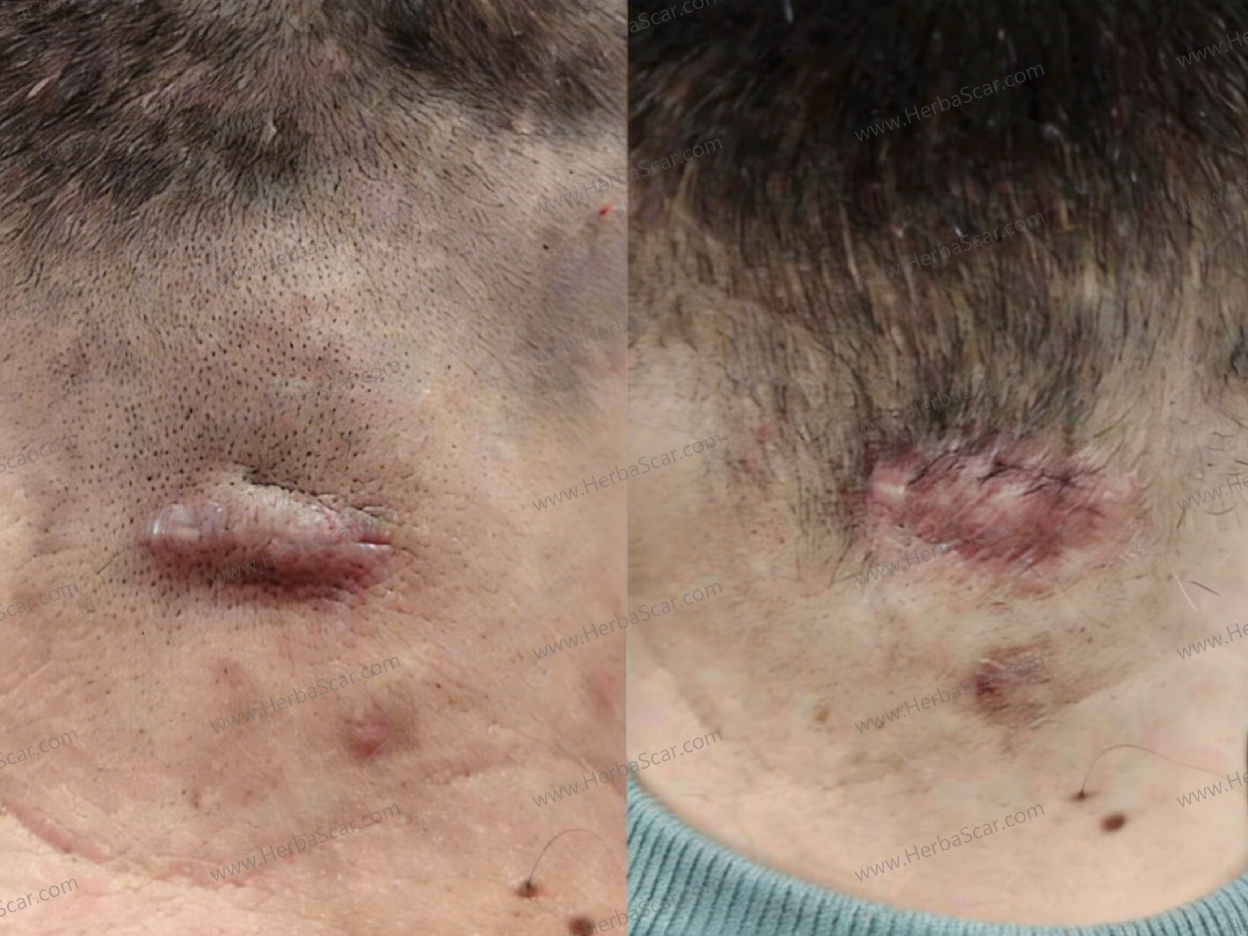
The following case describes a patient who developed a raised scar after lipoma removal surgery on the back of the neck, and how the appearance of the scar improved significantly after a structured botanical remodeling treatment.
The Background
The patient was a 32-year-old woman from the United States who underwent a routine lipoma removal procedure in early 2025. The surgery itself went smoothly and the incision healed without infection during the initial recovery period.
However, several weeks after the stitches were removed, she began noticing that the incision line was not flattening as expected. Instead, the scar gradually became thicker and more noticeable.
Over the next two months, the scar developed into a typical hypertrophic surgical scar. The tissue felt firm and slightly raised above the surrounding skin. The color was bright red and the surface appeared uneven. At night, the patient frequently experienced itching and occasional stinging pain, especially when lying on her back or when clothing rubbed against the area.
Because the scar was located at the back of the neck, it became visible whenever she tied her hair up or wore clothing that exposed the area. This made the patient increasingly self-conscious about her appearance.
Before exploring other options, she had already tried several common scar treatments, including silicone scar sheets and over-the-counter scar creams. Despite using them consistently for several months, the scar remained firm, raised, and noticeably red.
From a clinical perspective, this type of scar forms when fibroblasts in the healing skin produce excess collagen fibers, creating dense scar tissue that sits above the skin surface. Unlike keloids, hypertrophic scars usually stay within the original surgical incision line, but they can still cause significant cosmetic and physical discomfort.
The Treatment Journey
Once the incision was fully healed and there was no longer an open wound, the patient began applying HerbaScar Advanced Scar & Keloid Liquid twice daily as part of a scar remodeling regimen.
During the first few weeks of treatment, the patient noticed that the persistent itching began to subside. This change occurred relatively quickly and was one of the earliest improvements she reported. As the weeks progressed, the color of the scar slowly shifted from a dark, inflamed red toward a softer pink tone, suggesting a gradual reduction in local inflammation and improved circulation around the scar tissue.
By the second month, more visible structural changes began to occur. The previously rigid scar tissue started to soften, and the raised portion became less prominent. During this period, a thin medicated scab formed over the thickest part of the scar as the skin underwent a controlled shedding process. The patient carefully avoided touching or removing the scab, allowing it to detach naturally as the underlying tissue renewed.
Following this stage of cellular renewal, the scar appeared noticeably smoother and flatter. The height of the raised tissue had already decreased significantly, and the surrounding skin tone began to look more uniform.
By the end of the third month, the transformation was quite clear. The once thick and rope-like scar had become largely flat, and its color blended much more closely with the surrounding skin. The itching sensation had completely disappeared, and the skin texture felt considerably softer. Compared with its original appearance, the hypertrophic component of the scar had improved by approximately seventy percent.
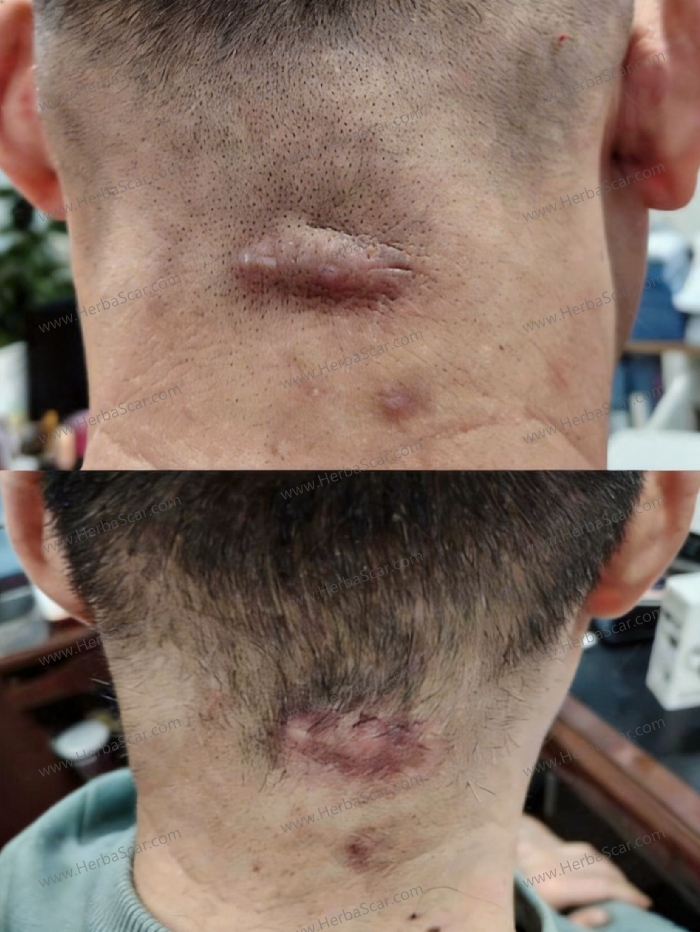
To support long-term stability and reduce the possibility of recurrence, the patient continued gentle scar care and protection during the ongoing skin remodeling phase.
Doctor’s Analysis
From a medical standpoint, this case represents a classic example of hypertrophic scar formation following surgery. When the skin is injured during a surgical incision, the body immediately begins repairing the damaged tissue through a series of overlapping healing stages.
During the early phase of wound healing, inflammatory cells and growth factors arrive at the injury site to clean damaged tissue and prevent infection. In the following weeks, fibroblasts begin producing collagen fibers that rebuild the structural framework of the skin. Ideally, these collagen fibers gradually reorganize and flatten during the final remodeling phase of healing.
However, in some individuals this balance is disrupted. Fibroblasts remain overactive and continue producing excess collagen, leading to thick, raised scar tissue. Mechanical tension—such as the constant movement of skin on the back of the neck—can further stimulate this abnormal collagen production.
In this case, the improvement likely resulted from a combination of biological mechanisms. Certain botanical compounds are believed to support micro-circulation within the scar tissue, which helps improve metabolic activity and accelerate the breakdown of excessive collagen deposits. At the same time, the formula may help soften dense collagen bundles and gradually reduce the firmness of the scar.
The temporary scab formation observed during treatment suggests that the skin underwent a phase of controlled cellular turnover, allowing abnormal scar tissue to be replaced with healthier new skin cells. Over time, this remodeling process can reduce scar height, improve texture, and normalize skin color.
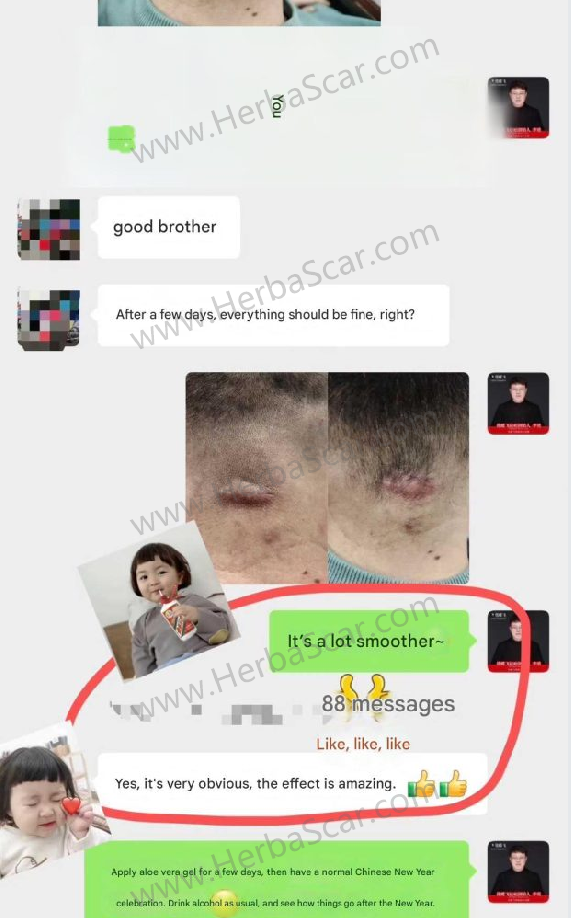
Although every patient heals differently, this case illustrates how consistent treatment during the scar remodeling stage can significantly improve the appearance and comfort of raised surgical scars.
Leave a Reply