Patient Background and Concerns
Patient: Female, 26, United States
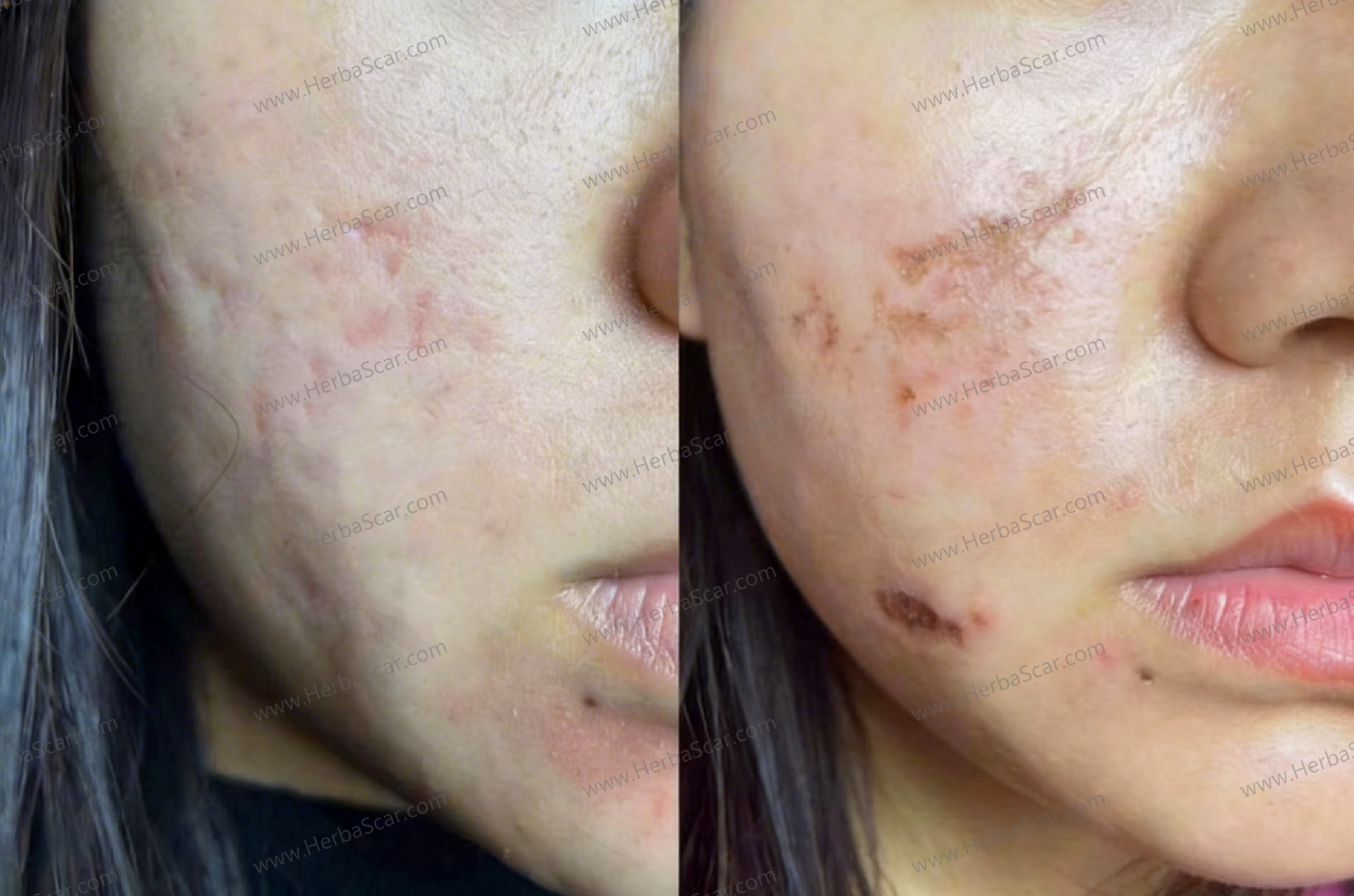
Like many people who struggled with acne during adolescence, this patient believed the worst part would be the breakouts themselves. However, after years of severe cystic acne in her late teenage years, the inflammation eventually subsided and left behind a more persistent issue — deep pitted acne scars across both cheeks.
When she first contacted us, the acne pits had already been present for nearly three years. Under normal lighting they were visible, but under angled lighting or in photographs, the indentations created noticeable shadows that made her skin appear uneven.
She explained that the scars had gradually become her biggest concern. While active acne could be treated, these atrophic acne scars seemed permanent.
Several types of scars were visible on her cheeks, including ice pick scars and boxcar scars, both common forms of pitted acne scars caused by collagen loss during the skin’s healing process.
Before seeking professional guidance, she had already tried numerous approaches, including drugstore scar creams, silicone gels, and exfoliating skincare products. Unfortunately, none of these treatments produced meaningful improvement.
This experience is actually very common. Most surface-level skincare products cannot penetrate deep enough to affect the dermal layer where acne scars form, which is why many people see little change even after months of treatment.
Treatment Journey
After evaluating the condition of her scars, we recommended a HerbaScar™ deep botanical remodeling protocol designed specifically for pitted acne scars and uneven skin texture.
Unlike thick creams that remain on the surface, the liquid formula is designed to deliver active botanical ingredients through the skin barrier to the deeper tissue where scar remodeling must occur.
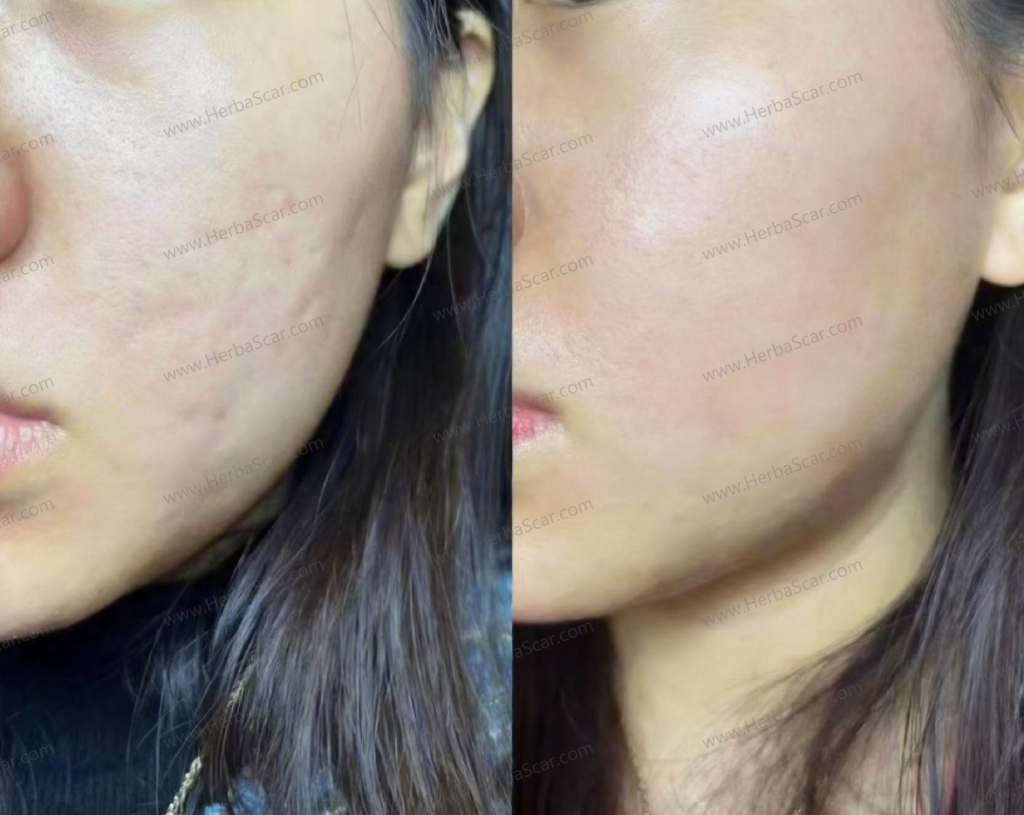
During the first month of treatment, the patient applied the solution twice daily. Within the first couple of weeks, she began noticing subtle changes. The skin surrounding the deeper scars started to feel slightly softer, and the rigid edges of several acne pits became less pronounced.
She also observed that the redness surrounding older acne sites gradually faded, giving her cheeks a more even tone.
As treatment continued into the second month, the improvements became more visible. The previously hardened scar tissue began to soften further, and the depressions appeared less sharp under angled lighting. The surface of the cheeks gradually looked smoother, and makeup began to sit more evenly on the skin.
By the end of the third month, the overall texture of the cheeks had improved significantly. The deeper acne pits had become noticeably shallower, and many smaller scars had blended much more naturally with the surrounding skin.
While the deepest scars were not completely erased, the reduction in depth and shadowing created a visibly smoother appearance.
Before and After Results
The comparison photos taken before and after treatment showed clear improvements in skin texture.
Before treatment, the cheeks contained multiple deep acne pits that cast shadows under natural light. These indentations created a rough, uneven appearance that became particularly noticeable in photographs.
After approximately 90 days of consistent treatment, the depressions had softened considerably. The edges of the scars appeared smoother, and the overall skin surface reflected light more evenly.
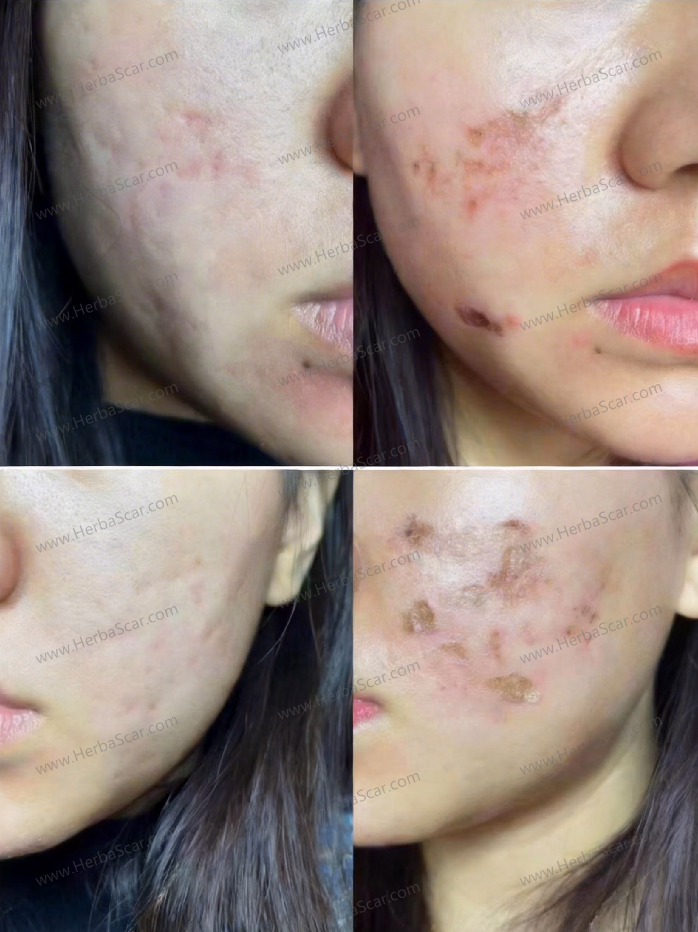
The change was not an overnight transformation, but rather a gradual remodeling process that improved the skin structure step by step.
Patient Feedback
After completing the treatment cycle, the patient shared that the improvement had made a meaningful difference in her daily life.
Previously, she often avoided situations where her skin would be closely examined, such as bright environments or close-up photos. As the acne pits became less noticeable, she began feeling more comfortable in those situations again.
What she appreciated most was that the improvement looked natural. Instead of covering scars with makeup or filters, the skin itself had become smoother.
Doctor’s Analysis
From a clinical perspective, this case illustrates a classic pattern of atrophic acne scarring caused by long-term inflammatory acne.
When severe acne damages the dermal layer of the skin, the healing process can fail to produce enough organized collagen. This results in permanent depressions known as pitted acne scars.
Many traditional scar creams fail to produce visible results because they remain on the surface of the epidermis and cannot penetrate the dense collagen matrix within the dermis.
In this case, the improvement was largely due to the deep remodeling mechanism of the botanical formula.
One key ingredient, Borneol, functions as a natural penetration enhancer that helps active compounds travel through the skin barrier and reach the dermal layer. This allows the active ingredients to interact directly with scar tissue.
In addition, botanical components such as Panax Notoginseng help support micro-circulation and tissue regeneration. Over time, this process encourages the gradual rebuilding of healthier collagen structures beneath the depressed scars.
From the perspective of Traditional Chinese Medicine, many chronic scars are associated with a condition known as “blood stasis,” where circulation in damaged tissue becomes stagnant. By improving circulation and softening hardened scar tissue, the skin can slowly restore a more balanced structure.
Instead of simply masking scars on the surface, this approach focuses on long-term dermal remodeling, allowing the skin to rebuild smoother texture over time.
Final Thoughts
Acne scars, especially deep pitted acne scars, can be frustrating because they often persist long after breakouts have disappeared. However, this case demonstrates that meaningful improvement is possible when treatment reaches the deeper layers of the skin.
Scar remodeling is rarely an overnight process. Consistent treatment over several months is usually required to soften scar tissue and support healthy collagen rebuilding.
With the right approach, even long-standing acne pits can gradually become less visible, helping restore smoother skin texture and renewed confidence.
Leave a Reply