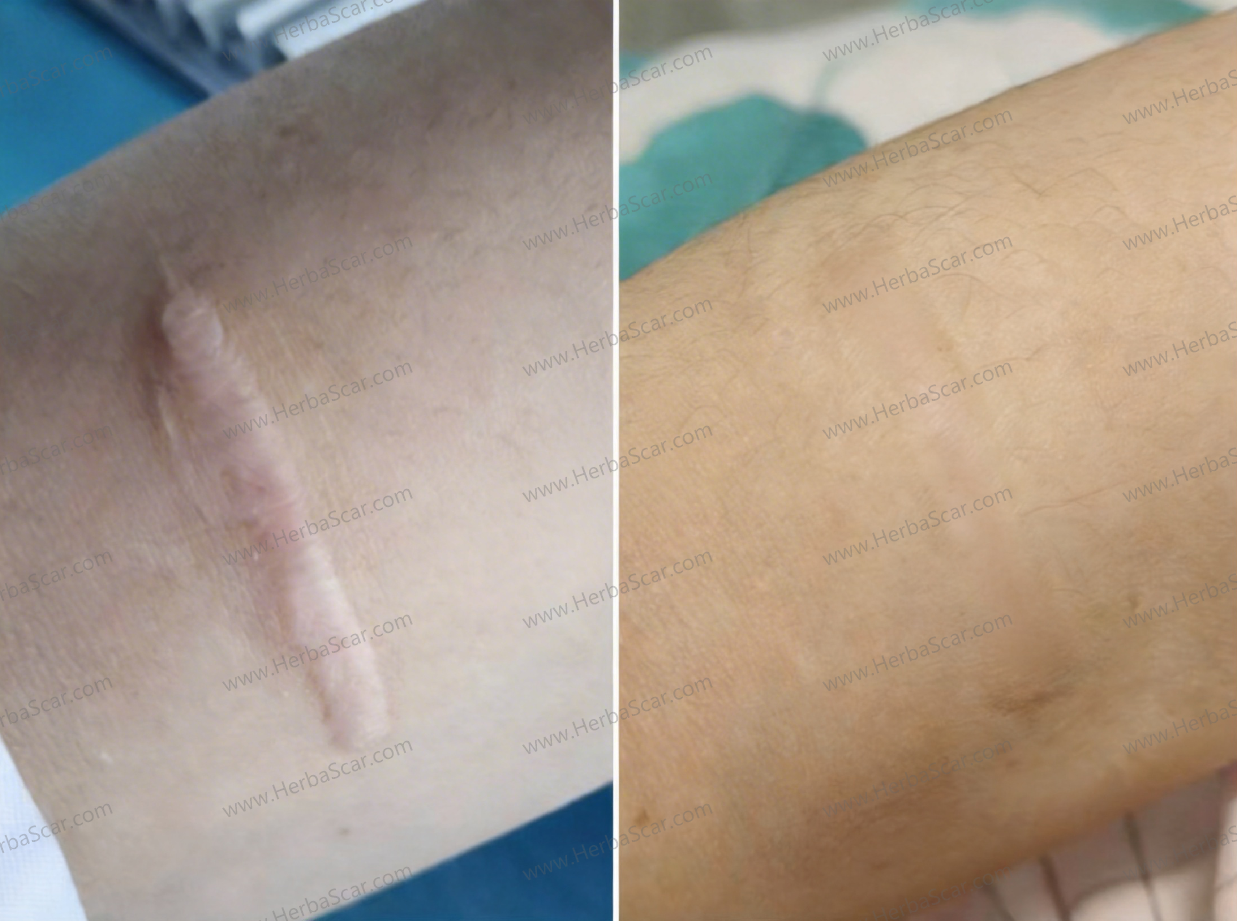
Living with a traumatic hypertrophic scar from an old injury can be uncomfortable and affect self-confidence. This case involved a 26-year-old woman from the USA who had a 4-year-old knife wound scar on her forearm. The scar was firm, raised, red-brown, and itchy at night. She had tried silicone sheets and herbal oils, but nothing helped. Through consistent use of HerbaScar™ Advanced Scar & Keloid Liquid, she achieved an 80% flattening, improved skin color, and relief from itching, demonstrating that even old hypertrophic scars can remodel with proper treatment.
Patient Background and Scar Overview
The injury occurred during meal preparation four years ago, leaving a deep laceration that was not stitched. Over time, the wound healed into a pronounced hypertrophic scar, approximately 4–5mm above the skin surface. The tissue was firm and rubbery, dark red-brown in color, and caused nighttime itching and occasional sharp pain when leaning on it. Previous surface-level treatments, including silicone strips and herbal gels, failed to penetrate the dense scar tissue, leaving her frustrated and self-conscious.
Traumatic hypertrophic scars like this form when deep dermal injuries heal abnormally. Excess collagen accumulates in a dense, disorganized manner, causing the raised, firm, and often itchy tissue. Unlike keloids, hypertrophic scars remain confined to the original wound boundaries, but they can still undergo meaningful remodeling—even years later.
Treatment Journey with HerbaScar™
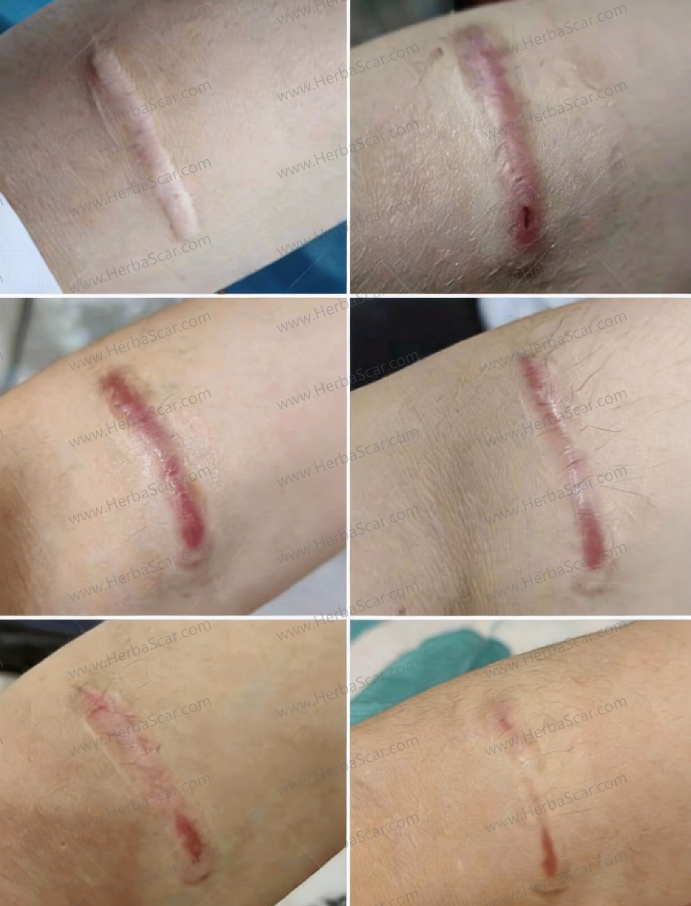
Month 1: Using HerbaScar™ Advanced Scar & Keloid Liquid twice daily, the patient reported that itching stopped within the first week. The scar’s color gradually shifted from dark red-brown toward pink.
Month 2: The hard tissue softened, and the raised height reduced by approximately 50%. Cellular shedding occurred naturally; no picking was allowed to protect new tissue.
Month 3: The scar flattened by about 80%, matching surrounding skin tone more closely. Itching and tightness significantly diminished, and edges blended seamlessly with adjacent skin.
The edges of the scar softened, creating a smoother contour. This transformation highlights that even long-standing scars can respond dramatically when treated with a consistent, deep-penetrating botanical protocol, rather than surface-level creams or sporadic use.
Expert Analysis: Why HerbaScar™ Worked
The success of this case lies in targeting the dermal root of abnormal scar tissue. Key botanicals in HerbaScar™, such as Borneol, Panax Notoginseng, and Galla Chinensis, accelerate micro-circulation, soften dense collagen, and reorganize scar tissue, while Licorice Root Extract calms inflammation and gradually lightens pigmentation. This multi-step botanical action allows old scars to remodel biologically over time, reducing height, improving color, and relieving persistent symptoms.
Clinically, this demonstrates that the age of a scar does not make it untreatable. With methodical, twice-daily application and gentle massage, hypertrophic scars—even several years old—can flatten significantly, restore comfort, and improve aesthetic appearance. This approach emphasizes the importance of patience, correct technique, and consistent treatment for deep tissue remodeling.
Takeaway
Traumatic hypertrophic scars may feel permanent, but structured botanical treatment can achieve meaningful improvements. Even scars that are several years old can soften, flatten, and blend into surrounding skin when treated correctly. This case illustrates that targeting the dermal root with deep-penetrating therapy, rather than only treating the surface, is key to restoring both physical comfort and confidence.
Leave a Reply